Half-Term, Handled: Seven Days in Delhi, Agra and Jaipur Without the Meltdowns
Photo: Unknown authorUnknown author, Public domain, via Wikimedia Commons
Half-term gives you a fixed, ungenerous window: seven nights on the ground if you're lucky, the first of which is spent in a jet-lagged haze. So this plan assumes tired children, a fraying adult or two, and the firm belief that a good family trip is one where nobody has to see everything. Here's a seven-day Golden Triangle that works with a UK school calendar rather than against it.
The honest maths of a half-term week
India sits 5.5 hours ahead of GMT — and 4.5 ahead during British Summer Time, which catches out anyone travelling in the late-May half-term. Most UK departures land in Delhi either in the small hours or just after dawn. That sounds grim and is actually a gift: you're arriving at the start of an Indian day, not the end of one.
Seven nights, minus two long-haul flights, leaves about five usable days. Five days across three cities is tight but honest. The version below deliberately keeps Delhi's biggest sights out of the first 24 hours, because nobody's first day in India should involve a queue.
Day one: land, swim, sleep, eat plainly
Book nothing. Check in, find the pool, order something unthreatening for lunch and set an alarm for a two-hour nap — two hours, not four, or bedtime becomes a hostage negotiation. In the late afternoon, go for a walk with no monument at the end of it. A park, a market, a shop selling crisps in flavours your children will still be discussing in 2027. That's the day.
Day two: one Delhi thing, done well
Pick one. Humayun's Tomb is the best first monument in the city for families: enormous gardens to run in, far fewer people than the Taj, and a proper 'oh' moment as you come through the gate. Qutub Minar works as a 45-minute hit if you're staying south. The Red Fort, the lanes of Chandni Chowk and Akshardham are all excellent and all wrong for day two.
Eat lunch somewhere busy with locals and a short menu. A thali is the friendliest format for children — several small things, no commitment, and the rice keeps coming.
Day three: the road to Agra, and the Taj from the quiet side
The Yamuna Expressway gets you there in around three and a half hours with a stop, so there's no need for a pre-dawn departure when the reward is sunset. Leave after breakfast.
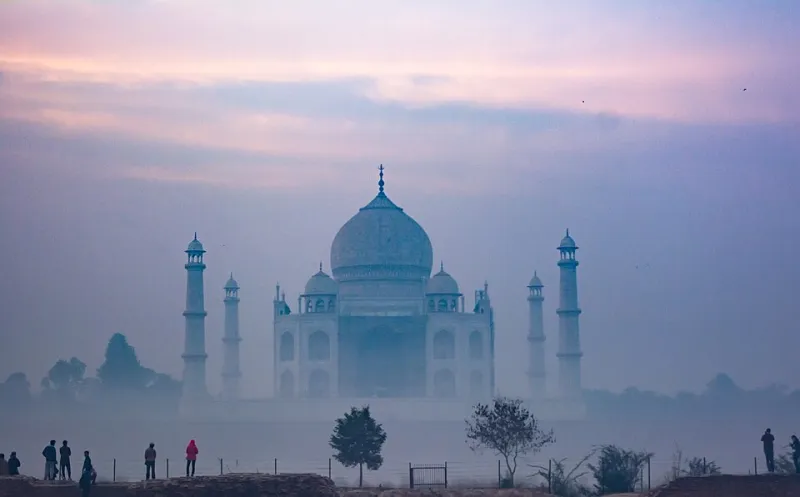
Spend the afternoon at Agra Fort — ninety minutes, a guide if you can, and a route that keeps you in the shade. Then cross the river to Mehtab Bagh for sunset, where the Taj sits framed across the water and children can run while adults sit on the grass. It is the best-value entertainment in Agra, and it costs almost nothing.
Day four: the early start that earns its keep
Sunrise at the Taj means being at the gate before it opens; the east gate is usually calmer than the west. Ninety minutes inside is plenty for most children, and the story carries better than the dates: an emperor building a tomb for his favourite wife, then spending his last years locked up with a view of it.
Then the long hop to Jaipur — four to five hours plus stops. Two honest suggestions: skip Fatehpur Sikri's crowds if the children are flagging, and consider Abhaneri's stepwell instead, a thousand-year-old geometry puzzle you can climb down into for twenty minutes. Arrive in Jaipur in time for a late, easy dinner.
Day five: Jaipur, early mornings and late afternoons only
Jaipur in the middle of the day with children is a mistake. Amber Fort at eight, when the gates open and the coaches haven't arrived, is not. Do the fort, come down, swim, eat.
Late afternoon is when Jaipur comes good. A block-printing workshop, a kite-making session, a cookery class where the children make their own chapattis — all of these beat a fourth fort. If you want a view, Nahargarh at sunset with an ice cream is a fair trade. And please skip the elephant rides at Amber; there are better ways to spend the money.
Day six: cover the ground, not the checklist
For the return leg, take the train or fly. A Vande Bharat service from Jaipur to Delhi takes roughly four and a half hours and feels nothing like a car journey; a short flight does it in about an hour. Either is a better use of a family's last full day than another five hours on the road.
Day seven: build in a buffer
Flights home are usually late evening, so keep the final day loose: a last swim, a last market, a last plate of something you'll try to recreate in your kitchen in Sheffield and quietly fail.
What to cut without guilt
- The full Chandni Chowk food crawl with tired children
- Jantar Mantar, unless your family genuinely enjoys instruments
- Fatehpur Sikri at midday, in the heat
- Any 'government emporium' stop your driver proposes politely
- The fourth fort, and the fifth
When the private car is worth it
Delhi to Agra, and Agra to Jaipur, are the two transfers where a private car pays for itself: door to door, luggage stays put, and you can stop the moment a small person needs to. Inside Delhi, a car is often a liability — the metro is fast, cheap, air-conditioned and a novelty for children who have only ever seen the Piccadilly line. In Jaipur, a car for the morning Amber run and an auto-rickshaw for everything else is a decent balance.
Keeping them engaged without turning it into a worksheet
Give each child a small sum in rupees to spend on one thing, and let them think about it for days. Buy postcards and post them home to Wiltshire or wherever. Learn five Hindi words together. Keep a 'brave-o-meter' for food. Let them choose one photograph each evening that sums up the day.
None of this is a curriculum. The point is to leave room for the bits they'll actually remember: the pool, the monkeys, the man who let them try the drums.
The boring things that save the trip
Bottled water everywhere, hats, snacks permanently in the day bag, a loo strategy that assumes the answer is usually 'now', and a kit with rehydration sachets and children's paracetamol. October sunscreen still matters, and so does a light layer for early starts.
Half-term doesn't allow for a perfect trip. It does allow for a good one — as long as you cut as decisively as you book.