Bare Feet and Better Manners: A Temple Etiquette Field Guide for the Golden Triangle
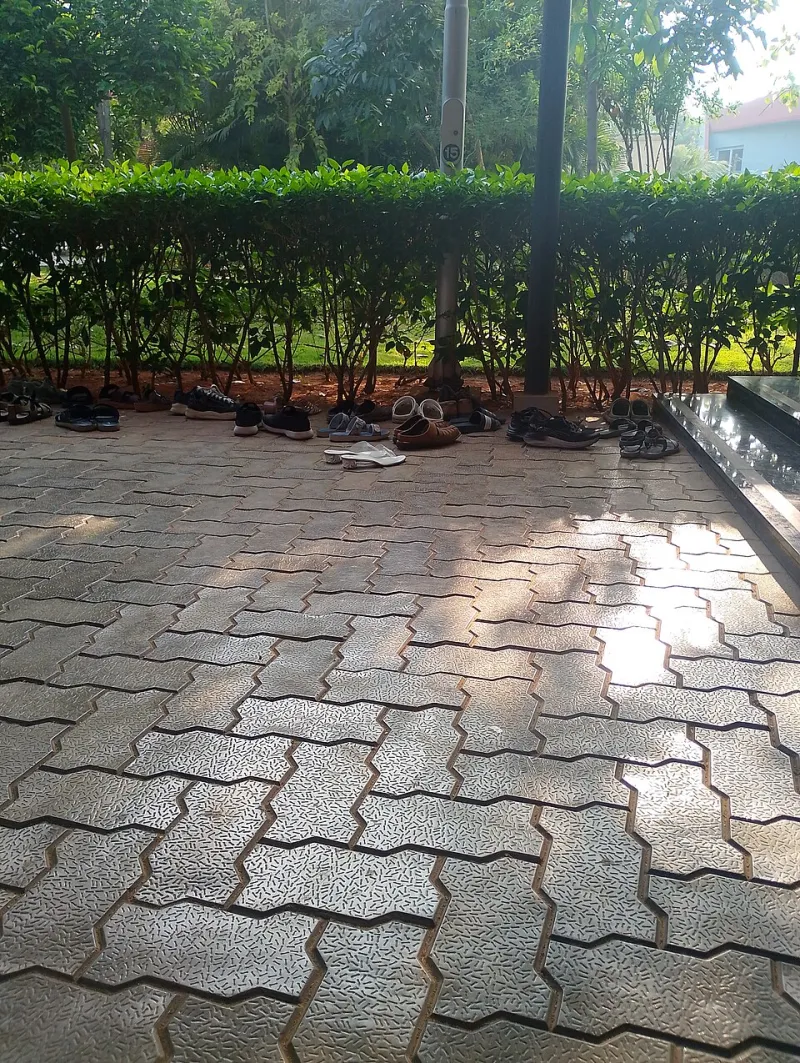
Photo: Clintacc, CC0, via Wikimedia Commons
Temples, mosques and shrines are not a side dish on the Golden Triangle. They are part of the main course: the call to prayer echoing over Old Delhi, the flower sellers outside Jaipur's Govind Dev Ji, the sheer calm of Delhi's Lotus Temple. They are also places where visitors get it wrong — not out of disrespect, usually, but because nobody explained the house rules. So here is the friendly version, with no finger-wagging and a few phrases that will make you sound less like a walking guidebook.
The golden rule: copy the room
If you remember one thing, make it this: look at what everyone else is doing. If locals are barefoot, you should be barefoot. If women are covering their heads, find a scarf. If a sign says no photos, put the phone away. Etiquette in India is not a single national code; it changes from a Sikh gurdwara to a Jain temple to a working mosque. The room will tell you more than any list.
Dress: covered is easier
Think British summer church, not beach. Shoulders and knees covered is the safe default for men and women. A light scarf or sarong in your day bag is worth its weight in gold: it becomes a head covering in a mosque or gurdwara, a wrap for a bare shoulder, or a cushion on a hot step. Shorts and vests are often fine on the street; they are not fine in most active places of worship. Jain temples may also ask you to leave leather items outside, so leave the leather wallet in the hotel if you can.
Shoes: off, but not always at the same point
Most temples and mosques ask you to remove shoes before entering the sacred area. Sometimes that means the outer gate; sometimes it means just before the inner shrine. Watch where the pile of shoes starts. Socks are usually acceptable. Carry a cloth bag so your trainers do not have to be left in a chaotic heap. Shoe minders are common and usually charge ₹10–20; pay them and keep the token. At the Taj Mahal, which is a mausoleum rather than a temple, you may need shoe covers or to go barefoot for the main platform — same principle, different admin.
Cameras: the sign is the boss
Photography rules are gloriously inconsistent. Some sites allow phones but charge for cameras. Some ban both. Some allow photos outside but not around the inner shrine. Akshardham in Delhi is the strictest: phones and cameras go in a locker. Jama Masjid may charge a camera fee. In active temples, never photograph worshippers without asking, and never use flash in a prayer hall. If a priest or volunteer waves you away, smile, nod and put the lens down. It is not a negotiation.
Offerings and prasad
You do not have to bring anything, but if you want to, flowers, fruit or sweets are the usual choices. Hand them over with your right hand, or leave them where the sign or the attendant indicates. Do not touch the idols or the altar. If prasad — blessed food — is offered, accept it with your right hand and eat a little; if you have allergies or a delicate stomach, a polite refusal is fine. Do not pocket it and bin it later. That is the sort of thing that turns a nice moment into a bad one.
Around worshippers
People are often praying, not posing for your content. Keep your voice low, do not block the path to the shrine, and avoid pointing the soles of your feet towards the idol or altar. In some temples, the custom is to walk clockwise around the shrine; follow the flow. Women may have separate areas or a different entrance; look for signs. Some temples have traditional restrictions around menstruation or leather, which are not always posted. If you are unsure, ask quietly or follow what other visitors are doing. You are a guest; being curious and tactful counts for more than getting every rule right.
A few phrases that help
Namaste — hello, with respect. Kya photo lena allowed hai? — is photography allowed? Joote kahan rakhein? — where should we leave our shoes? Prasad kahan chhodun? — where should I leave the offering? Main andar aa sakta/sakti hoon? — may I come in? Use sakta if you identify as male, sakti if female. Dhanyavaad — thank you. A smile does the rest.
Site-by-site quick notes
Delhi: Jama Masjid asks for shoes off, head covered and shoulders and knees covered; a camera fee may apply and it is busy at prayer times. Gurudwara Bangla Sahib asks you to cover your head, remove shoes and wash hands and feet; the community kitchen is open to all and volunteers are welcome. Lotus Temple is shoes off, silence inside the prayer hall and no photos in the hall; it is a Bahá'í house of worship, not a tourist attraction with a gift shop. Akshardham has strict security, no phones or cameras, and modest dress; allow extra time.
Agra: the Taj Mahal is a mausoleum, not a temple, but the respect rules are similar: no touching, no tripods without permission, shoe covers or bare feet at the main platform. Agra Fort's mosques may ask for shoes off and covered heads.
Jaipur: Govind Dev Ji is an active temple — shoes off, no photos in the inner areas, keep moving with the crowd. Birla Mandir is calmer: shoes off, modest dress, no photos of the deities. Galta Ji, the monkey temple, is shoes off; watch your sunglasses and snacks, and do not flash at the monkeys or the worshippers. Amber Fort's Kali Temple is small, active and often crowded; shoes off, keep your voice down.
The do-and-don't cheat sheet
Do: carry a scarf and socks; cover shoulders and knees; ask before photos; use your right hand; follow locals; keep small notes for shoe minders; speak softly in prayer halls.
Don't: wear shorts or vests into active worship; touch idols or altars; use flash; photograph people praying; point feet at a shrine; hand offerings with your left hand; argue with a volunteer about the rules.
None of this is about being perfect. It is about being attentive. A quiet namaste, a scarf in your bag and a willingness to copy the room will get you further than any checklist. And you will be welcome back.